
Share this
Key Takeaways
- Switching between small tasks all day leaves planners less time for judgment.
- Loadsmart introduced six AI agents designed to take that work off your team.
- Your team sets approval points and keeps the calls that need judgment.
- Loadsmart's AI agents work on top of the software your team already uses.
If you plan or coordinate freight, you know the workday doesn't run in a straight line. A primary carrier rejects a tender overnight and the load still has to pick up today. A detention issue from three weeks ago needs an answer. The information behind a freight claim is spread across multiple sources. None of those tasks is hard on its own. The strain comes from switching between them, starting one thing and moving to the next before it's finished, which leaves less time for good judgment calls.
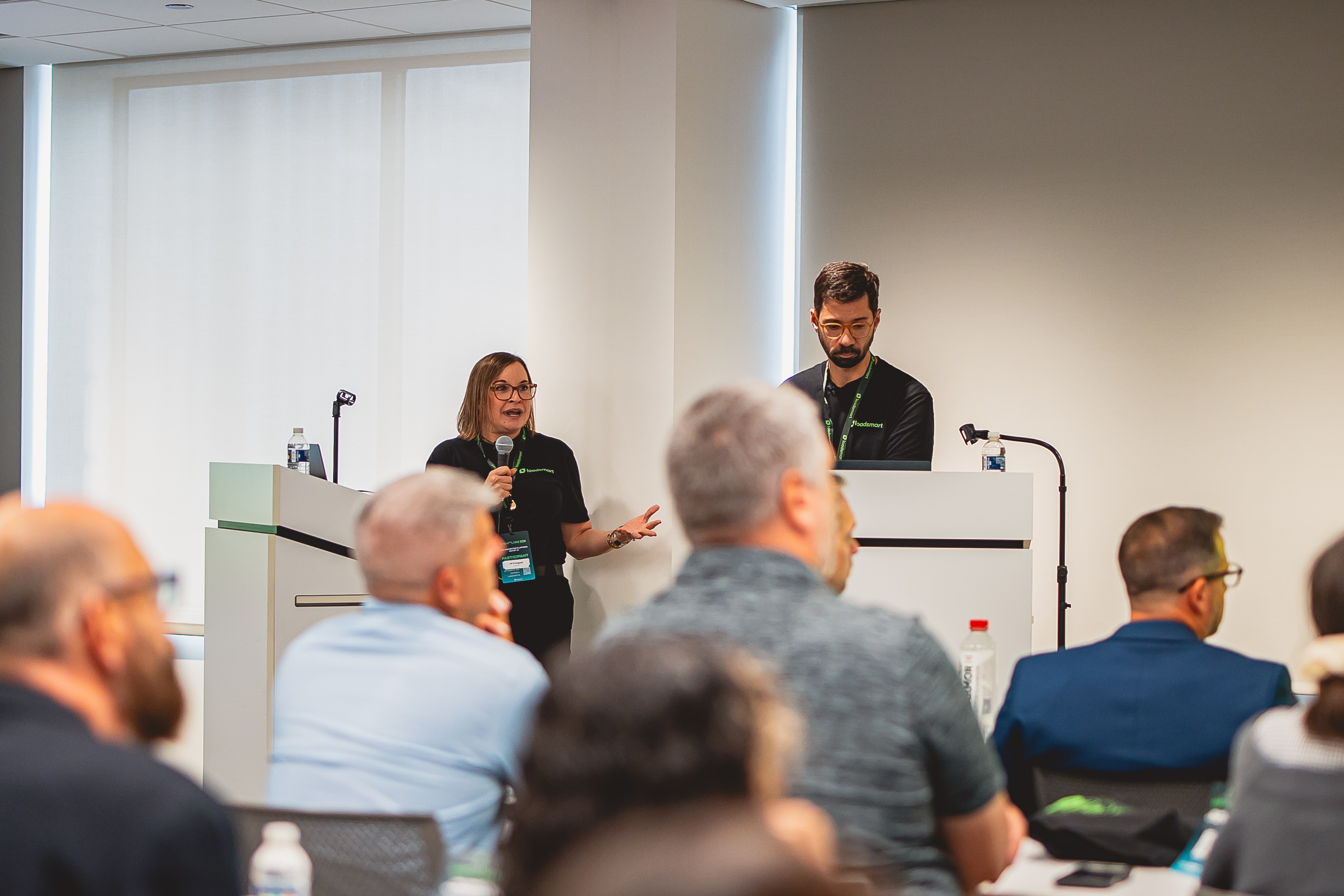
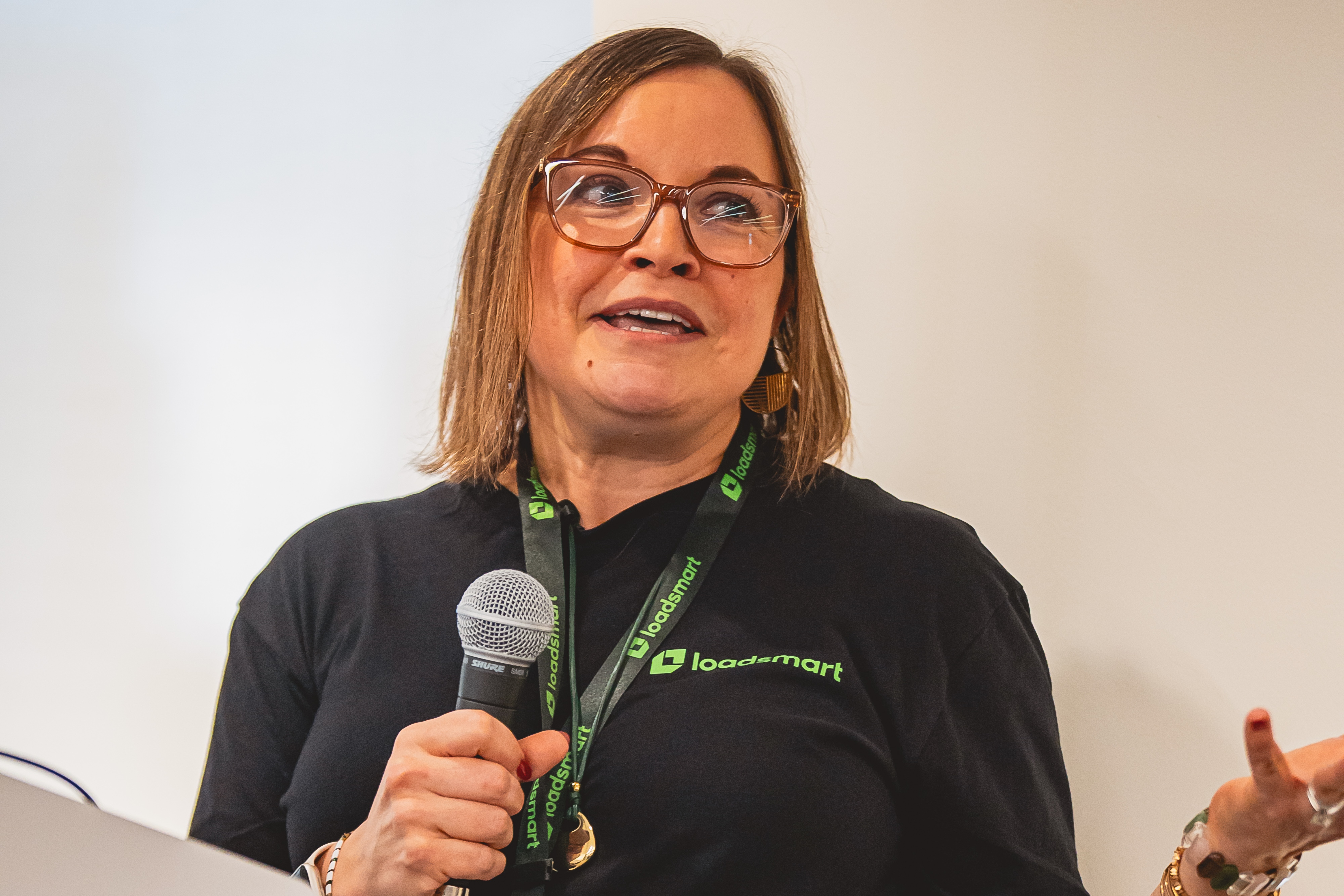
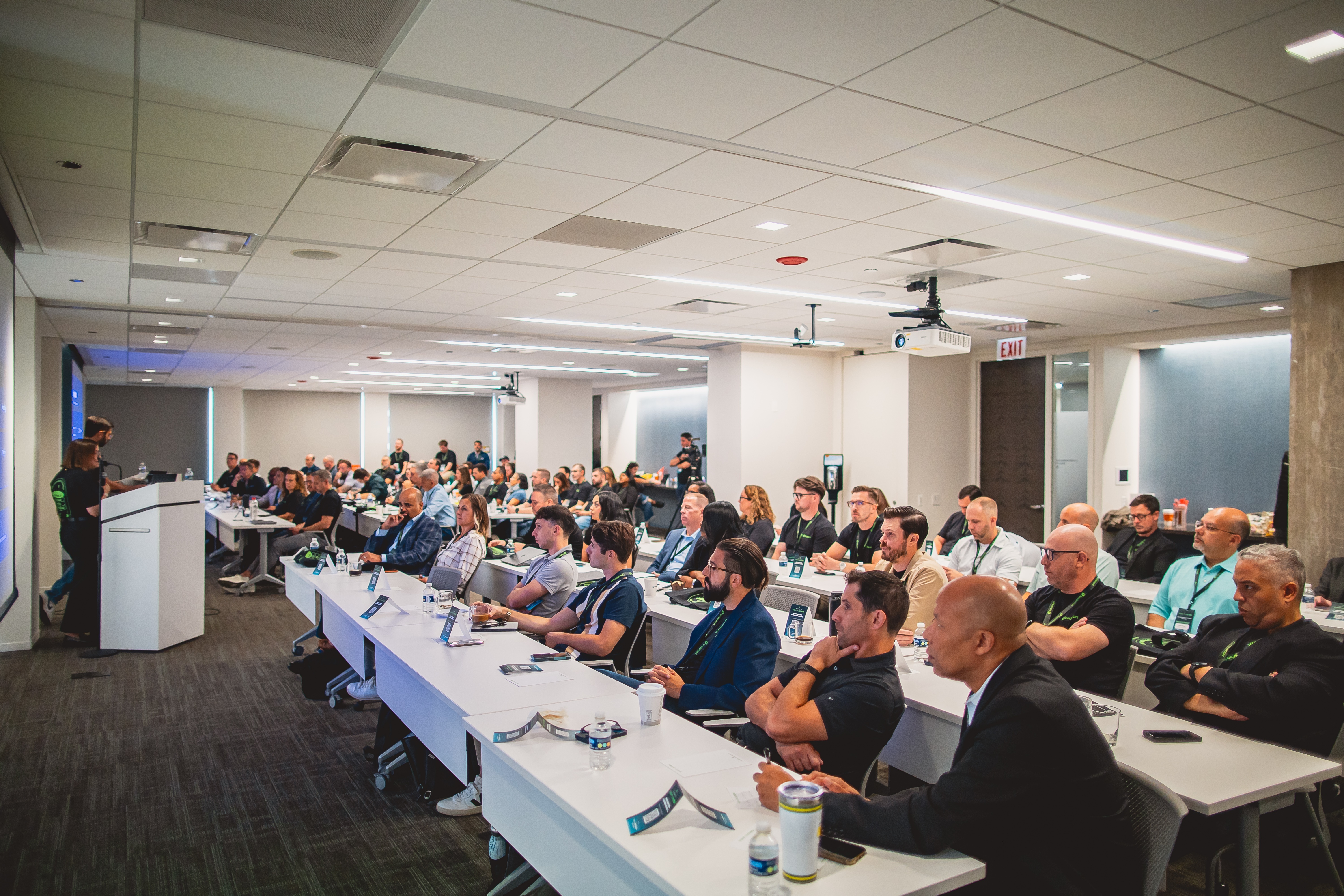
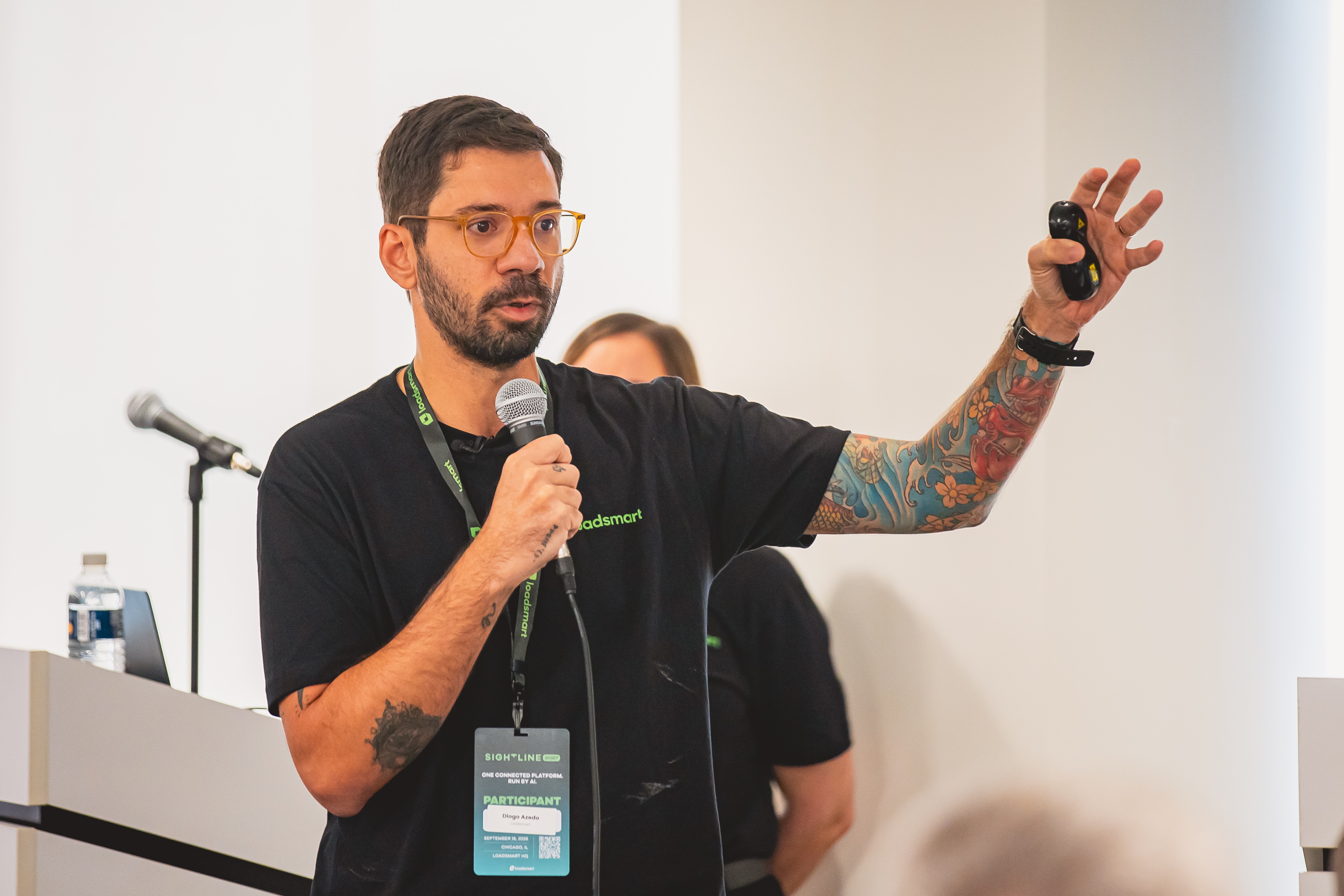
That workday was the starting point for "Six Agents, Zero Busywork," the second session at Sightline 2027, held at Loadsmart's Chicago headquarters on September 16th, 2026. Jill Prangnell and Diogo Azedo, Senior Product Managers at Loadsmart, explained what each of the six Loadsmart AI agents does, how it operates, and where its work ends and your team's begins.
What Work Do Loadsmart's AI Agents Take Off a Transportation Team?
Loadsmart's AI agents take on repetitive work transportation planners and coordinators already do, such as filing documents, gathering claim paperwork, chasing late loads, and scheduling. Jill said each AI agent is built around a job your team already knows how to do well, so the team gets more efficient and saves time.
These are the AI agents she walked through:
- Document handling: files every bill of lading, POD (proof of delivery), and invoice that lands in your inbox with the shipment it belongs to, then shares it with your system of record, meaning the software where your official shipment data lives.
- Freight claims: speeds up gathering the supporting documentation for freight claims. Loadsmart is estimating that filing time could be cut in half.
- Tracking: chases the silence that often follows a late load and starts the resolution process.
- Scheduling and rescheduling: frees time most teams would rather put toward work that needs a person.
Jill explained why tracking is hard to keep up with alone.
Because as a person, you know we can only do so many things at one time. You could have five late loads at one time. It's impossible to chase each one of those at one time.

Jill Prangnell
Senior Product Manager II, Loadsmart
Where Does an AI Agent Hand the Work Back to a Person?
An AI agent hands the work back at the approval points your team sets and at any task that depends on a relationship, a negotiation, or a judgment call. Jill said approval points can be built into any AI agent's workflow, so the work doesn't have to run start to finish without a person signing off.
Diogo added that freight happens in the real world, where trucks break down, receivers close early, and weather happens. AI has a hard time figuring those situations out, so someone will always be needed to make the judgment call.


How Do AI Agents, Software, and Freight Experts Work Together?
Loadsmart designed a three-layer system because freight work will always include some tasks for each layer. Diogo described the layers this way:
- AI agents take on the high-volume, repetitive work, including custom AI agents built for a specific workflow.
- Software, such as ShipperGuide, Opendock, or another system of record, is where the AI agents write data so your team can monitor and audit it later.
- Freight experts, or your own team, handle the remaining work that requires judgment.
He said offering only one layer might not be enough. Because the AI agents work on top of your system of record, the data reaches your ERP (enterprise resource planning system) through the APIs you already use, which means you don't need to worry about disrupting your company's technology or convincing stakeholders to change.
How Do AI Agents Get Better from One Quarter to the Next?
AI agents improve each quarter because every load moved through the system becomes data the system learns from, which Diogo called the compound factor. He framed the outcome as a possibility.
So you can have the Q2 better than Q1, Q3 better than Q2, and by Q4 you might be automating 95% of your tasks that you need.

Diogo Azedo
Senior Product Manager, Loadsmart
The AI agents run with your strategy, so the more a team designs and tweaks that strategy, the more it can automate. A new lane or a new customer constraint stays with your team at first, then you refine the strategy and the AI agents can take it on. That moves people away from calling carriers and chasing disputed charges, toward advising the AI agents on how to do the work.
What Is Loadsmart AI?
Loadsmart AI is a set of AI agents that run freight work, backed by freight experts who resolve the exceptions. AI runs your freight, and our experts handle the exceptions.
The six AI agents are:
- Document Collection & Filing: gathers and files proof of delivery files, invoices, and other paperwork.
- Tracking & Status Updates: pulls status from carriers and posts updates.
- Tender Failures: re-tenders down your routing guide and rebooks when a tender falls through.
- Proactive Load Audits: checks loads before pickup and flags at-risk transit before it becomes a penalty.
- Claims Processing: collects documents, validates claims, and drafts responses for your approval.
- Scheduling & Re-Scheduling: books dock appointments and reschedules when a pickup slips.
For workflows outside these six, our team can scope building a custom AI agent for your team.
Loadsmart is offering three ways to see Loadsmart AI in action on your freight first:
- A personalized demo built on your highest-impact workflow, running on your freight
- A one-day onsite workshop, where we come to you
- A proof of concept working on your data
AI runs your freight, and our experts handle the exceptions.
What Should Transportation Teams Take Away from This Session?
The main takeaway is that AI agents are built for the repetitive work in a transportation team's day, and the calls that need judgment stay with your team. Think back to the day Jill described at the start: a rejected tender, a detention issue, and claim paperwork spread across multiple sources, all landing before lunch. The AI agents are designed to take on the repetitive parts of that day, so your planners and coordinators have more time for relationships, negotiations, and the decisions only a person can make. Diogo closed by asking shippers to bring the workflow that takes up most of their team's time, so the best place to start is naming that one workflow.
The next session in this series, "Beyond Visibility: Real Time AI Across Scheduling, Yard, and Dock," features Aaron Thomas, Director of Engineering, Dock and Yard, and Nate Allan, VP of Enterprise and Partnerships.
You can watch every session on the Sightline 2027 hub.

Frequently Asked Questions
What are the six Loadsmart AI agents?
They are Document Collection & Filing, Tracking & Status Updates, Tender Failures, Proactive Load Audits, Claims Processing, and Scheduling & Re-Scheduling. Loadsmart can also build custom AI agents for a workflow specific to your operation.
Do AI agents replace transportation planners?
No, the AI agents take on repetitive work while relationships, negotiations, and judgment calls stay with people. Teams can also build approval points into an AI agent's workflow so a person signs off before the work moves forward.
Do AI agents require replacing your current systems?
No, the AI agents work on top of the system of record you already use, such as ShipperGuide or Opendock. They write data there so your team can audit it and use it through the APIs you already rely on.