
Share this
Key Takeaways
- Eric Johnson sees AI adoption as a long race that's just begun.
- Service providers have become the AI innovation arm for shippers.
- Many teams freeze when AI can build almost anything.
- Start with one workflow and see Loadsmart AI on your own freight.
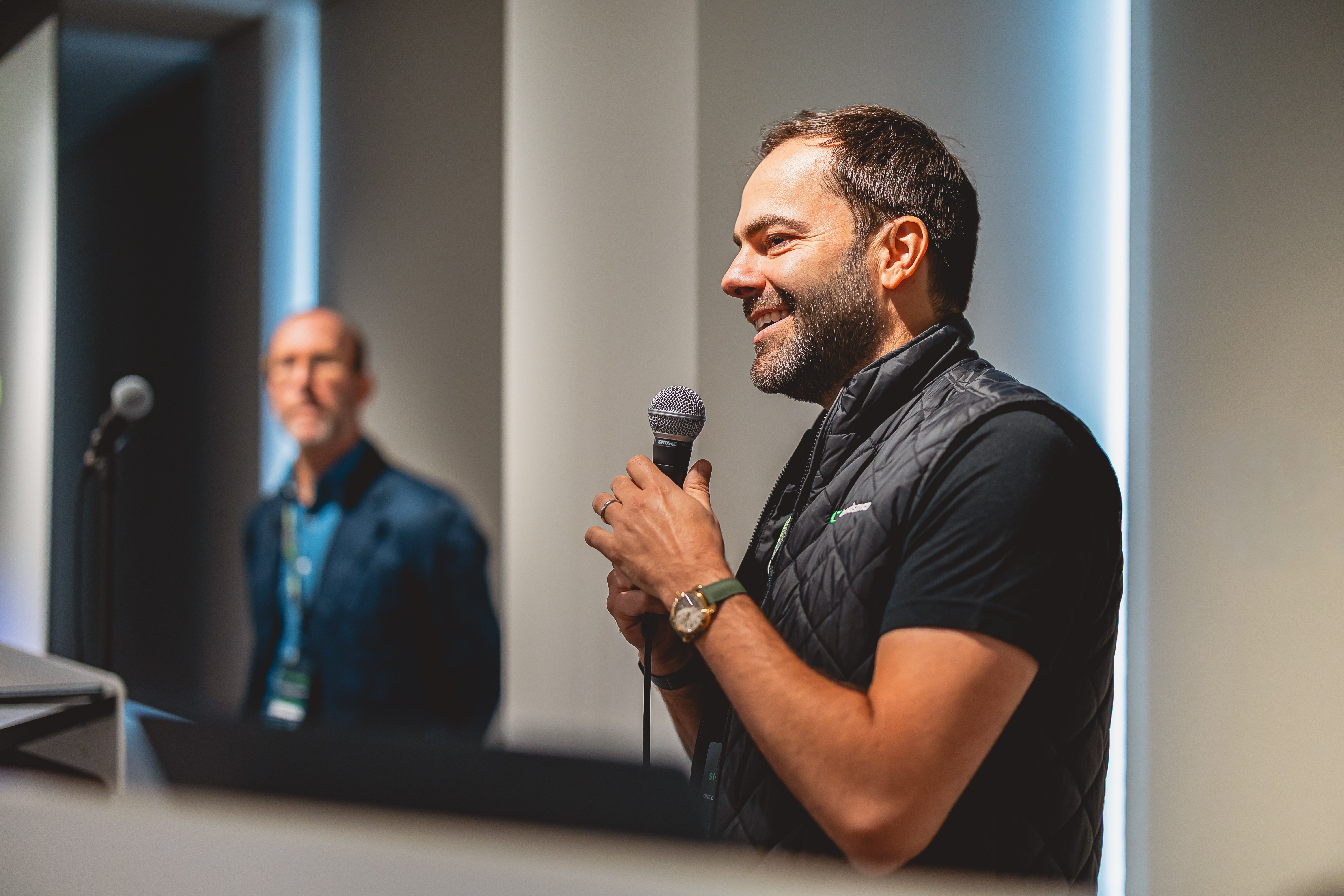
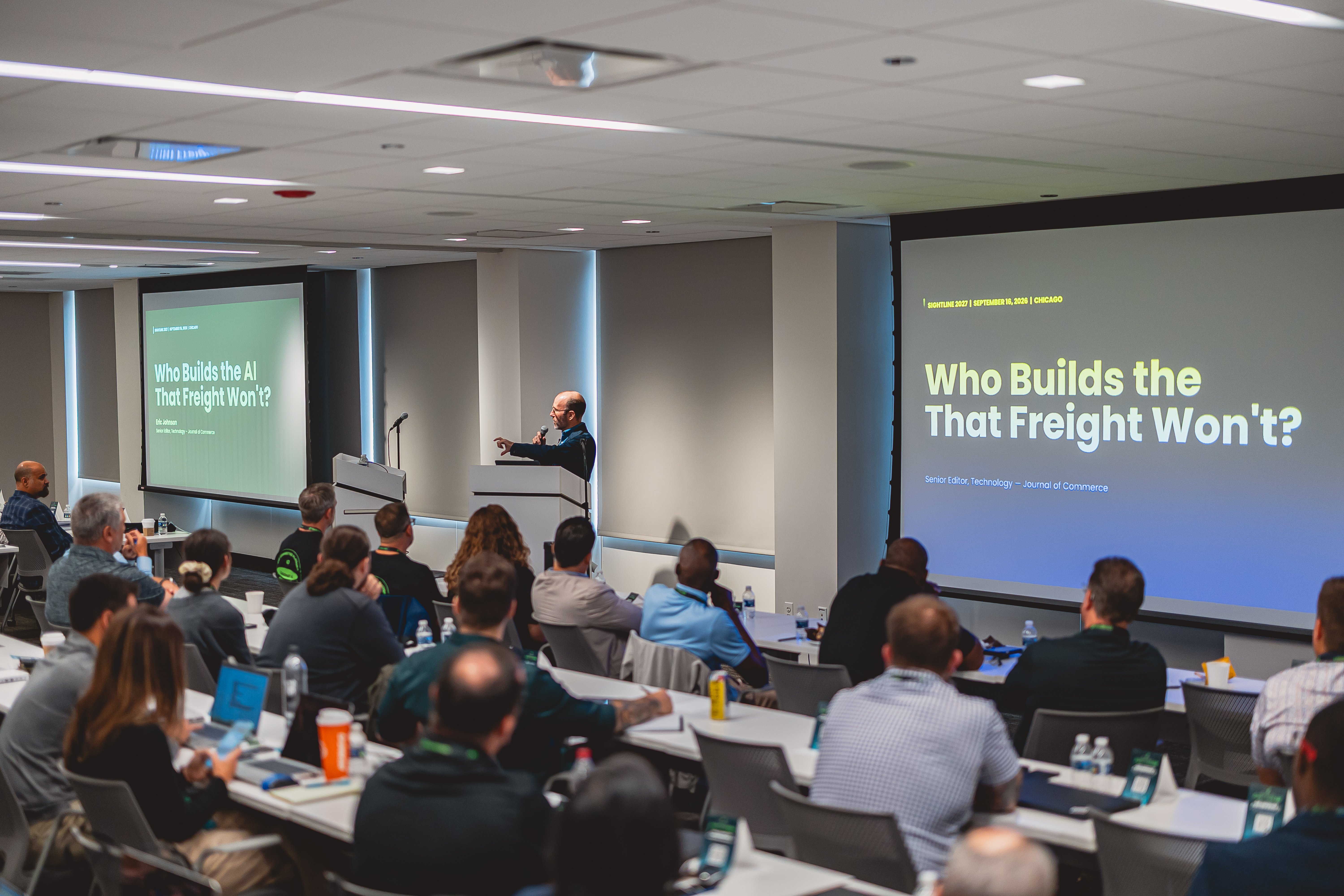
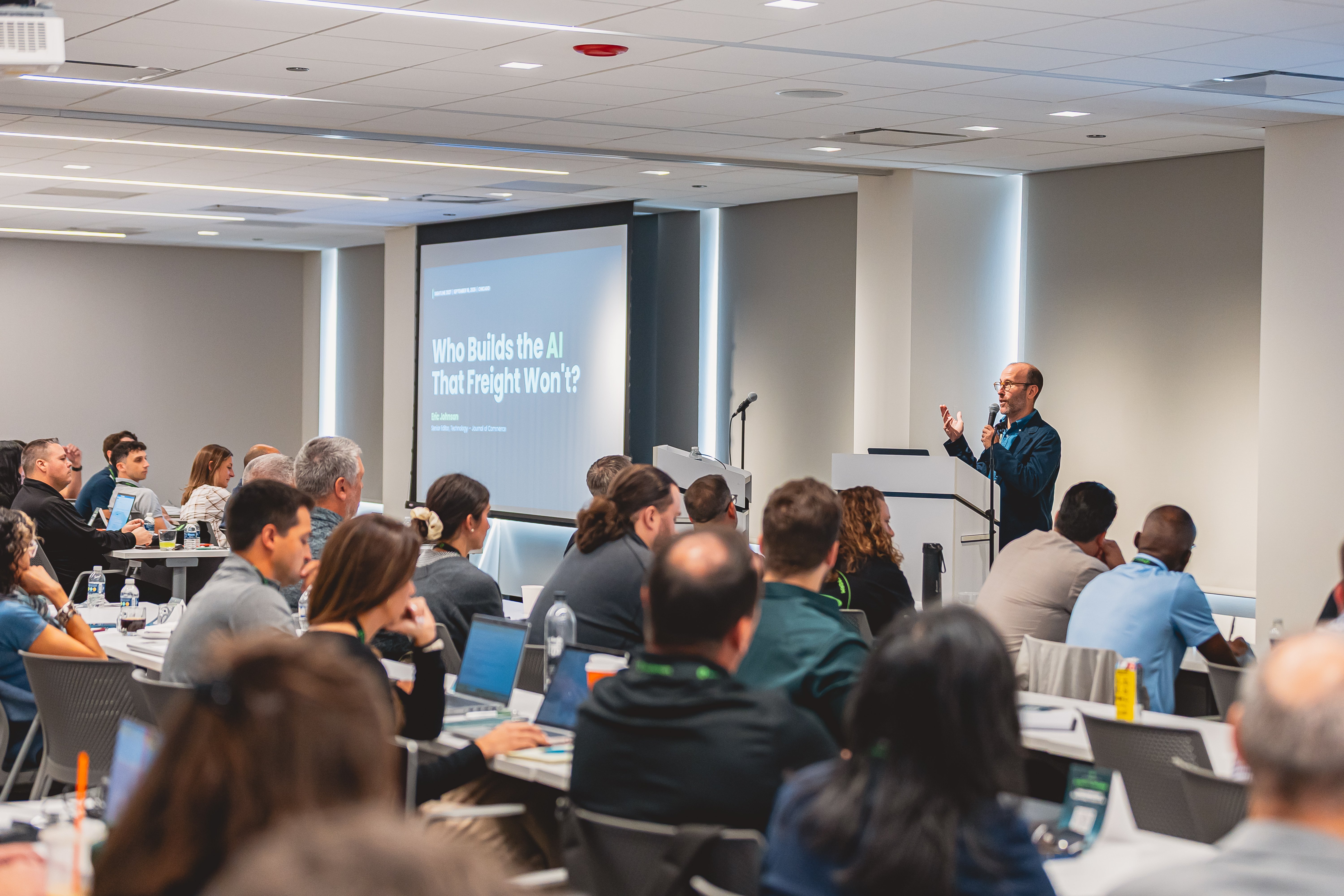
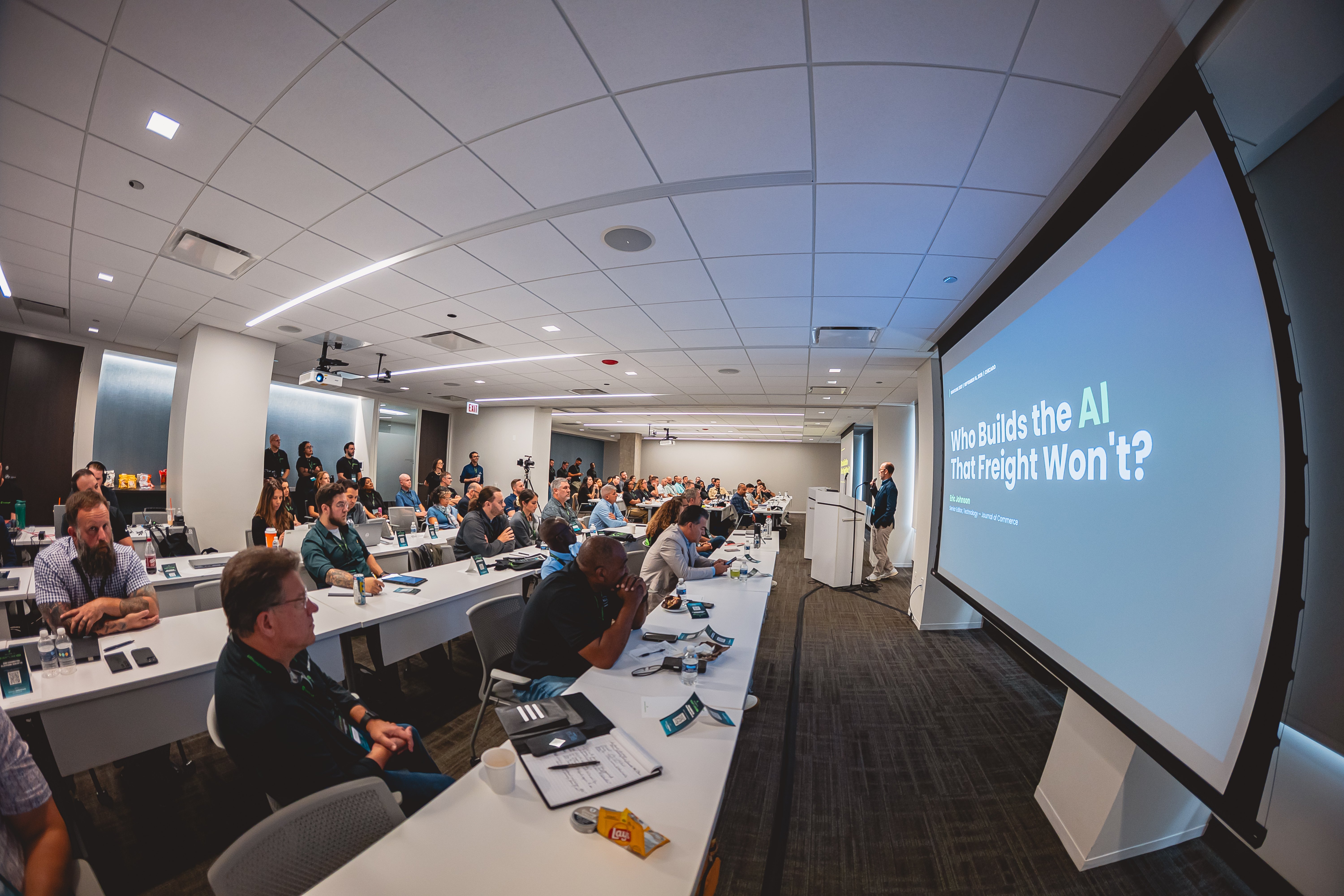
What would your team build if AI could build almost anything you asked for? Eric Johnson, Senior Editor of Technology at the Journal of Commerce, called that blank page the imagination gap in his keynote at Sightline 2027, held at our Chicago headquarters on September 16th, 2026
Eric has covered logistics technology for about 15 years. He believes AI will open up uses nobody has had the time to invent yet, and that the time it takes to catch up keeps getting shorter. A lot of that building is already happening through the service providers shippers rely on, like brokers, 3PLs, and software vendors.
This post breaks down his session, "Who Builds the AI That Freight Won't?", and what it means for enterprise shippers deciding where to start with AI in logistics, including where Loadsmart AI fits. The full recording is below, and Eric's deck is further down the page.
What Is Sightline 2027?
Sightline 2027 is Loadsmart's annual event for enterprise shippers, and the first edition brought enterprise shippers from 28 companies to our Chicago headquarters on September 16th, 2026. It carries the 2027 name because each edition looks one year ahead, so this one was our sightline into next year. For a look at the full day, read our Sightline 2027 recap.
Why Isn't Freight Building Its Own AI?
Freight isn't building its own AI because logistics rarely wins the budget conversation inside a shipper's company. Eric showed the functions competing for technology investment (product, sourcing, merchandising, marketing and logistics) with logistics as a thin sliver. In his experience talking with shippers, a logistics investment usually has to show it helps sourcing or customer service before it gets approved.
He asked the room whether their teams end up on the back burner, and the room agreed. He also asked who has a dedicated AI line item in their budget and who is expected to use AI in their day-to-day job. The pattern he sees on the shipper side is a cross-functional AI committee deciding where AI goes first, which means logistics is competing with every other function for a spot on that list.


Who Is Building AI for Enterprise Shippers?
Much of the AI in transportation and logistics is being built by the service providers enterprise shippers already work with, by default more than by mandate. Eric listed LSPs, brokers, 3PLs, and customs brokers. Most of them don't own the cargo and many don't own assets, so their business depends on running more efficiently and bringing shippers new solutions. If they fall behind, in his words, there are 10,000 other companies ready to take their place, which is why he sees so much of the AI work in freight happening on the service provider side.
That shift raises three questions from his deck that every shipper should be able to answer: who owns the data, who governs it, and who carries the risk. He told the room to be careful about what goes into tools like Claude or Codex when someone builds a prototype, since most companies now train employees on what data can't be entered. A 3PL or software vendor with its own data governance can act as a protective layer between a shipper's data and those tools, so it's worth asking any of the AI logistics companies you're evaluating how they handle it.
How Should Enterprise Shippers Evaluate AI in Logistics?
Judge every AI tool by the outcome it delivers. Eric framed it as the gap between what gets shown and what actually runs day to day. The question to ask in any demo is whether it takes work off your team.
He pointed to repeatable tasks and lower-stakes decisions that take up people's time as the best fit for AI. He also said plenty of outcomes don't need AI at all, since it's a powerful tool that isn't the right one for every granular task.
On rollout, he said no shipper wants to replace every system at once, and compared it to redoing the electrical, plumbing and insulation in a house at the same time. The method on his deck was one workflow, then two, then six. So a shipper can take one process to a software company or 3PL, test it there, and expand from that.
What Is the Imagination Gap?
The imagination gap is the struggle to know what to build when a tool can build almost anything. Eric called it his favorite topic in AI right now. Most people find comfort in structured routines like email, spreadsheets and the same fields in the same system, and AI tools start from a blank prompt. His slide put it this way: you can do anything, which is why everyone freezes.
When someone in the audience asked how to get past it, he said to look around your team for the person who is most comfortable working with a blank slate. Once one person gets something going, the rest of the team can build on it. He also said it's okay to not know where to start, and that someone on your team is probably already doing interesting work with AI and just hasn't talked about it yet.
We individually and as companies probably need to retrain ourselves to be more comfortable with open, blank canvas environments if we really want to take advantage of everything you heard today.

Eric Johnson
Senior Editor, Technology, Journal of Commerce
Where Does Loadsmart AI Fit?
Loadsmart AI is built for the model Eric described, where a service provider builds the AI and an enterprise shipper starts with one workflow. Eric's session covered the whole industry, and this is how Loadsmart approaches it.
Loadsmart AI has six AI agents available today:
- Tender failures and re-tendering
- Tracking and carrier status updates
- Document collection and filing
- Scheduling and re-scheduling
- Claims processing
- Proactive load audits
For workflows outside these six, our team can scope building a custom AI agent for your team.
Loadsmart is offering three ways we can showcase what Loadsmart AI can do with your freight, so you can see it in action first:
- A personalized demo built on your highest-impact workflow, running on your freight
- A one-day onsite workshop, where we come to you
- A proof of concept working on your data
AI runs your freight, and our experts handle the exceptions.
Why Start Now?
Enterprise shippers who feel behind on AI have more time than they think. Eric's opening slide read "Undercommitted. Nobody in this room is miles ahead," and he told the room that AI adoption is a long race most companies have only just started. Since new tools no longer take five years to implement, he believes the time it takes to catch up is shrinking, as long as you don't keep your eyes closed.
Sightline 2027 brought enterprise shippers together to look at where freight and AI go next, and we're already planning Sightline 2028 to keep the conversation going.
Every Sightline 2027 session is on the Sightline 2027 hub, where you can also the personalized demo, onsite workshop and proof of concept.

Frequently Asked Questions
What is the imagination gap in AI?
The imagination gap is the struggle to know what to build when an AI tool can build almost anything. Eric Johnson, Senior Editor of Technology at the Journal of Commerce, says most people are used to structured work like email and spreadsheets, so starting from a blank prompt is hard. His advice is to find the person on your team who is most comfortable working from a blank slate and let them get something started.
Who builds AI for Enterprise Shippers?
Most AI in freight today is being built by service providers, including brokers, 3PLs, forwarders, customs brokers and software vendors. Eric Johnson describes them as the de facto innovation arm for shippers, since their business depends on operating more efficiently than their competitors.
How can Enterprise Shippers start with AI in logistics?
Enterprise Shippers can start with one workflow and measure the work it takes off their team, then expand one process at a time. Loadsmart offers a personalized demo, a one-day onsite workshop and a proof of concept on the shipper's own data, all before any contract starts.