
Share this
Key Takeaways
- MT is a long-term partnership; brokerage covers loads as needed.
- Brokerage fits spot needs, simple networks, and strong in-house teams.
- MT fits complex, multi-node networks and post-acquisition integration.
- Many shippers combine both, with brokerage covering peak demand.
Comparing managed transportation vs brokerage comes down to cost control, visibility, and how easily your freight operation scales. Both models move freight, but they are built differently. Brokerage secures capacity for individual shipments as needs come up, which suits spot freight and seasonal surges. Managed transportation takes over planning, procurement, execution, and reporting across the whole network, and it is measured against your KPIs over time. Some 3PL providers also offer hybrid approaches that combine brokerage with managed services.
The managed transportation vs 3PL decision depends on how complex your network is, how much your internal team can handle, and how much control you want over carrier relationships and data. This guide compares managed transportation and freight brokerage across relationship structure, pricing, technology, and ROI, and covers when each one fits and how to move from one to the other. It also covers where the two models work together.
Understanding the Two Models
The managed transportation vs freight broker difference starts with scope. A freight broker manages transactions by securing capacity, covering loads, and handling spot or contract shipments. This model prioritizes speed and flexibility, which makes it valuable in volatile markets. Loadsmart's freight brokerage, for example, lets shippers price, book, and ship with guaranteed capacity across FTL, LTL, and other modes.
Managed transportation serves as a strategic extension of the supply chain, integrating with systems, aligning with KPIs, and continuously optimizing performance. It focuses on how freight moves across the whole network, which is the central difference between managed transportation and brokerage. For a fuller definition, see what managed transportation is and what it includes.
Key Differences: Side-by-Side Comparison
Here is managed transportation compared to brokerage across six areas of operational structure and outcomes.
- Relationship: Brokerage often runs load by load, which suits flexible needs, while managed transportation providers act as long-term partners embedded in daily operations.
- Pricing: Brokerage pricing usually includes a margin on each load, while managed transportation often uses pricing structures tied to performance goals.
- Transparency: Visibility into costs and carrier selection varies by broker. Managed transportation provides operational transparency across procurement, execution, and reporting.
- Carrier Management: Brokers manage carrier relationships on the shipper's behalf, while managed transportation builds and optimizes a carrier network around the shipper's lanes.
- Analytics: Brokerage reporting focuses on shipment activity. Managed transportation delivers insights tied to KPIs.
- Continuous Improvement: Brokerage executes shipments. Managed transportation drives ongoing network optimization.
These differences shape how each model performs day to day. This comparison of TMS, 3PL, AI, and autonomy models adds two more options to weigh.
When Should You Use 3PL Brokerage?
3PL brokerage works best for organizations that need flexible, on-demand capacity without committing to a full-service logistics partnership.
Spot Capacity, Simple Networks, and Strong In-House Teams
Brokerage is effective for organizations with stable internal logistics and simple networks. Teams that already manage routing, carrier relationships, and performance metrics internally benefit from brokers as a supplemental resource.
Spot market coverage is a key use case. Brokers quickly secure capacity during seasonal surges or unexpected demand shifts. For companies with limited complexity, this approach enables execution without a full operational transformation.
When Should You Use Managed Transportation?
Managed transportation delivers the most value as network complexity increases and internal resources reach capacity.
Complete Outsourcing, Complex Networks, and Post-Acquisition Integration
Organizations with multi-node networks, high shipment volumes, or fragmented operations benefit from full-service management. Managed transportation centralizes execution, standardizes processes, and aligns performance across all locations.
Post-acquisition environments are a strong use case, including private equity portfolio companies combining networks after a deal. Integrating multiple systems, carriers, and workflows requires a unified strategy, and managed transportation provides that structure, speeding up alignment and improving efficiency across the combined network.
How Does Brokerage Pricing Affect Total Freight Spend?
Brokerage pricing is structured differently from managed transportation. Many freight brokers earn a margin on each load, so their revenue grows as shipping volume grows. That works well for flexible, as-needed capacity, but for a shipper focused on lowering total freight spend across a large network, it is worth understanding how those costs add up.
Visibility also varies. Depending on the provider, shippers may have limited insight into carrier rates, routing decisions, and margin, which can reduce leverage in cost conversations. Managed transportation addresses this with transparency across procurement and execution, and this breakdown of how opaque 3PL pricing affects shippers goes deeper on the margin question.
The Hybrid Model: Best of Both Worlds?
Some organizations combine brokerage and managed transportation to balance flexibility and control, and many 3PL managed transportation programs are built this way. This approach supports dynamic capacity needs while maintaining strategic oversight.
When and How to Combine MT and Brokerage
A hybrid model is most effective when managed transportation oversees core operations and brokerage supplements peak demand. Managed transportation providers often maintain brokerage relationships to secure overflow capacity without sacrificing visibility or control.
This structure preserves the benefits of both models while minimizing their limitations. It keeps optimization central while maintaining access to flexible capacity.
Which Model Delivers Better ROI?
For complex networks, managed transportation typically delivers stronger ROI when measured across carrier rates, network optimization, and freight audit recovery. To estimate the numbers for your own operation, see how much managed transportation can save.
Brokerage can deliver savings through rate negotiation and market access. Managed transportation typically delivers 3-10% carrier rate reductions, 10-40% optimization savings, and 5%+ in audit-driven freight recovery. Advanced AI-driven and autonomous models can add savings through automated decision-making and less manual intervention.
A top automotive manufacturer saves over $1.3M annually with Loadsmart Managed Transportation. Before working with Loadsmart, the company had limited access to detailed data and high freight spend from visibility gaps and fragmented shipment flows.
Technology Comparison
Technology defines the gap between execution and optimization. It determines whether a supply chain reacts to issues or anticipates and resolves them before they affect performance.
The Technology Gap Between Brokers and MT Providers
Brokerage platforms are typically built for load coverage and fast execution. Managed transportation adds optimization on top, with ERP and WMS connectivity across the network.
Managed transportation platforms integrate with enterprise systems, enabling real-time visibility, automation, and predictive analytics. This connectivity supports proactive decision-making and continuous improvement, which matters most for organizations focused on scalability and performance.
How Is AI Making Managed Transportation More Autonomous?
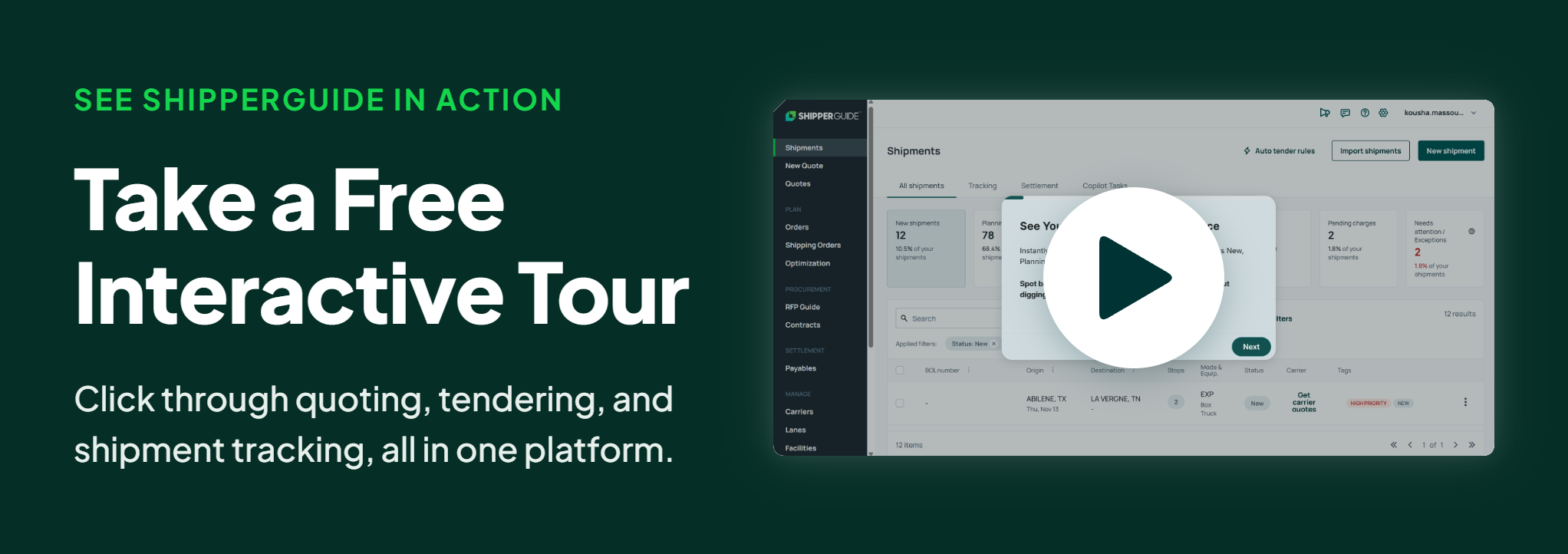
Modern managed transportation pairs AI-driven execution with a dedicated managed service. Rather than choosing between the responsiveness of a 3PL and the strategy of a managed program, shippers can get both from the Loadsmart Platform: ShipperGuide's AI-native TMS runs routing, procurement, and disruption response, backed by Loadsmart Freight Experts, while the shipper keeps direct carrier relationships and full data ownership.
AI agents run rate discovery and manage the bid flow when sourcing carriers, and they re-tender down the routing guide when a carrier rejects or misses a load, all within guardrails the shipper defines. Procurement runs as an ongoing loop instead of an annual bid, and exceptions are surfaced and acted on before they turn into detention or missed deliveries. The result is a managed model that scales with volume without adding headcount.
How Do You Transition from 3PL Brokerage to Managed Transportation?
Transitioning from brokerage to managed transportation requires a structured approach that aligns systems, data, and stakeholders before any operational changes take place.
Transition Process and Change Management
The transition begins with a full operational assessment, followed by system integration and carrier alignment. A phased rollout keeps operations running as new processes replace legacy workflows, and this managed transportation implementation timeline shows how each phase typically runs.
Change management focuses on communication, training, and performance tracking. Clear KPIs guide the transition so improvements in cost, service, and visibility show up quickly.
How Loadsmart Supports Managed Transportation Programs
Loadsmart's 4PL managed transportation services pair expert teams with technology, so enterprise shippers can cut freight costs and scale logistics without growing headcount. Whether you manage freight in-house today or are changing providers, the program flexes with your needs.
- A network strategy, built with human and machine intelligence, that balances near-term predictability with long-term adaptability.
- Data insights for negotiating better rates, finding the right spot and contract mix, and benchmarking performance.
- A rollout that moves from assessment and design to full deployment, with savings starting in 90 days or less.
The right freight model is the one that gives your team control over cost, data, and carrier performance.
Schedule a free transportation savings assessment to see where managed transportation, brokerage, or a mix of both fits your network.

Frequently Asked Questions
What Is the Difference Between Managed Transportation and 3PL Brokerage?
Managed transportation is a long-term outsourcing model that integrates with your systems, optimizes your carrier network, and improves performance over time, while 3PL brokerage secures capacity for individual shipments. Brokerage prioritizes speed and flexibility on each load, and managed transportation acts as an extension of your logistics team that is measured against your KPIs.
When Does Managed Transportation Make More Sense Than Brokerage?
Managed transportation makes more sense when your network has grown too complex for load-by-load support, such as multi-node operations, high shipment volumes, fragmented carrier relationships, or post-acquisition integration. If your team spends more time reacting to freight problems than optimizing the network, a managed model will likely deliver more value than brokerage alone.
How Does Managed Transportation Pricing Compare to 3PL Brokerage?
Managed transportation typically uses a management fee tied to performance goals, while brokerage usually charges a margin on each load that grows with shipping volume. For complex networks, managed transportation typically delivers 3-10% carrier rate reductions, 10-40% optimization savings, and 5%+ in audit-driven freight recovery, which lowers total cost of ownership over time.