
Share this
Key Takeaways
- Sightline 2027's dock and yard session showed where AI is going in Opendock.
- It covered MCP servers, SmartGate cameras, and the guardrails on AI.
- AI can do the repetitive dock and yard steps so your team doesn't have to.
- Start with one dock or yard workflow and see Loadsmart AI run it first.
Dock scheduling, gate check-in, and yard management all generate the data a warehouse team needs to keep trucks moving, and Opendock connects those steps in one platform, from the appointment to checkout. The next step is AI that uses that data to anticipate what your team wants to do and take the action for you.
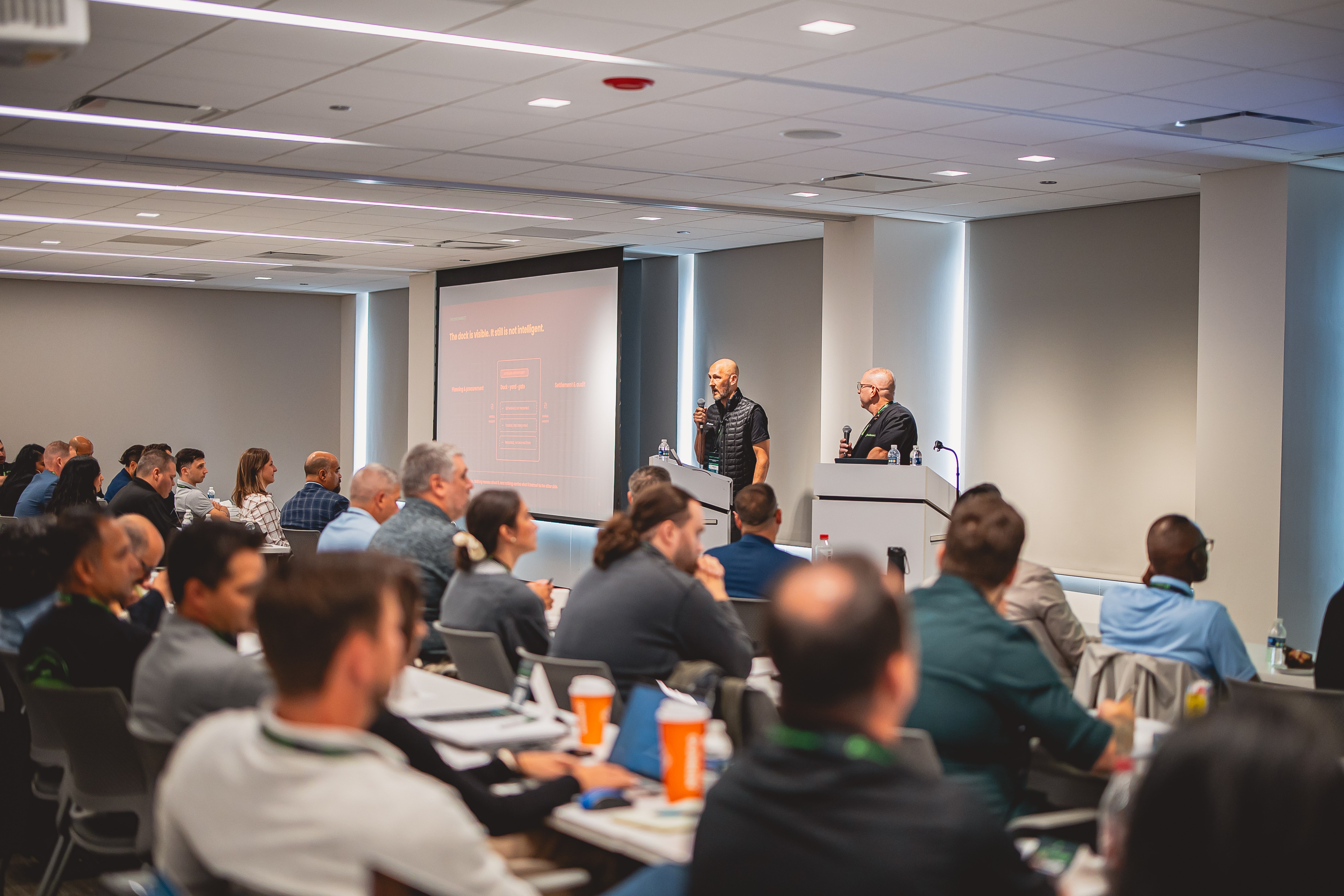
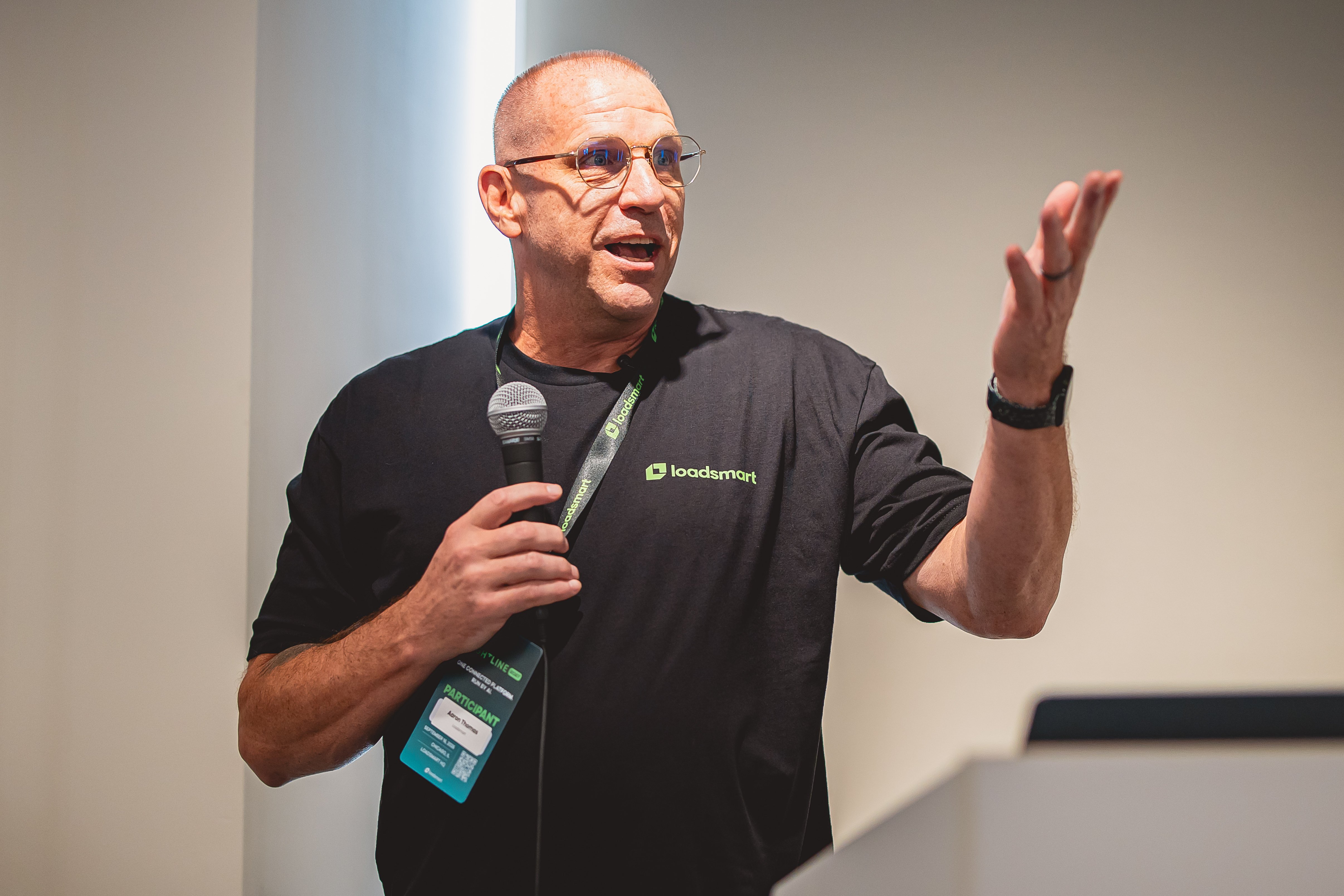
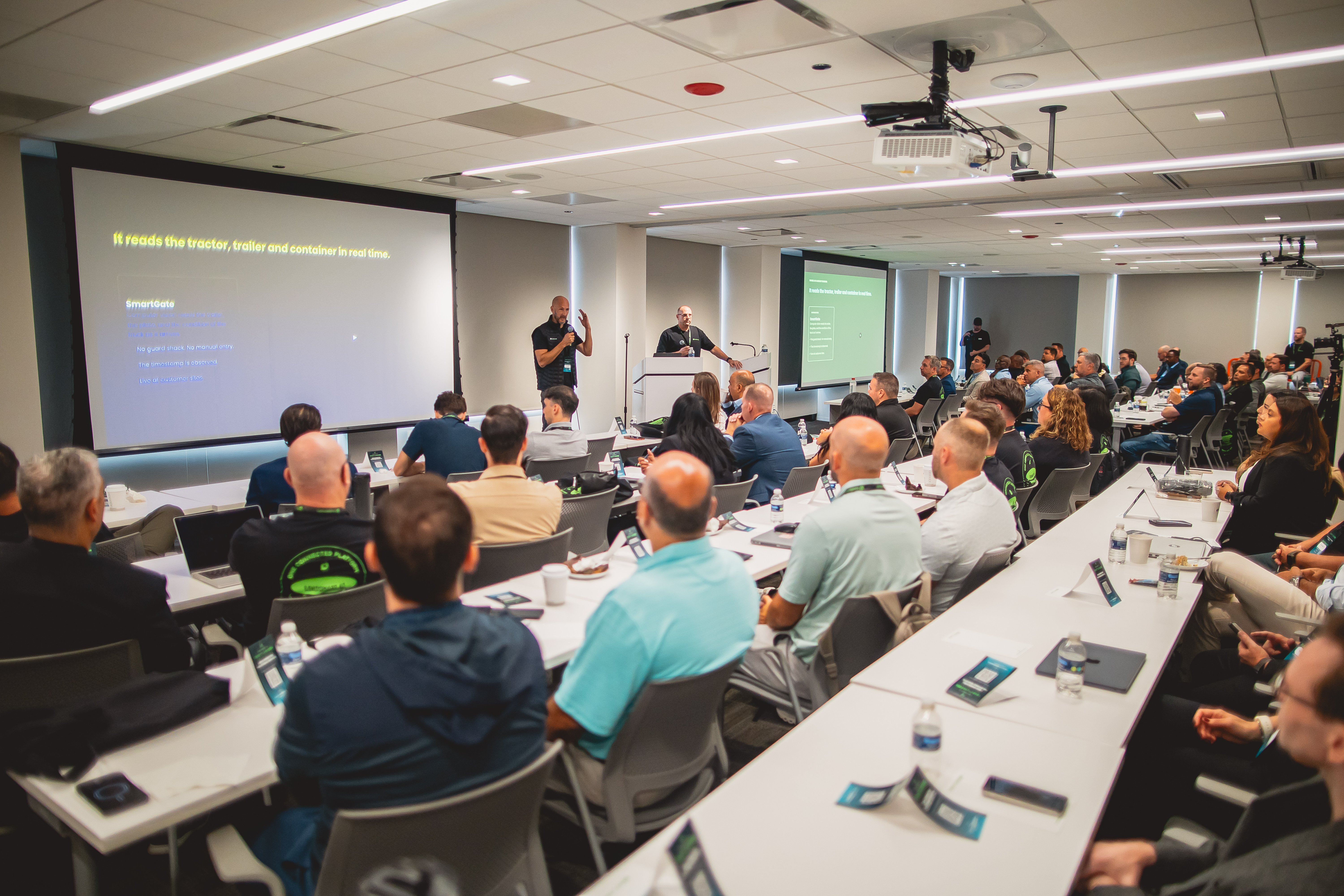
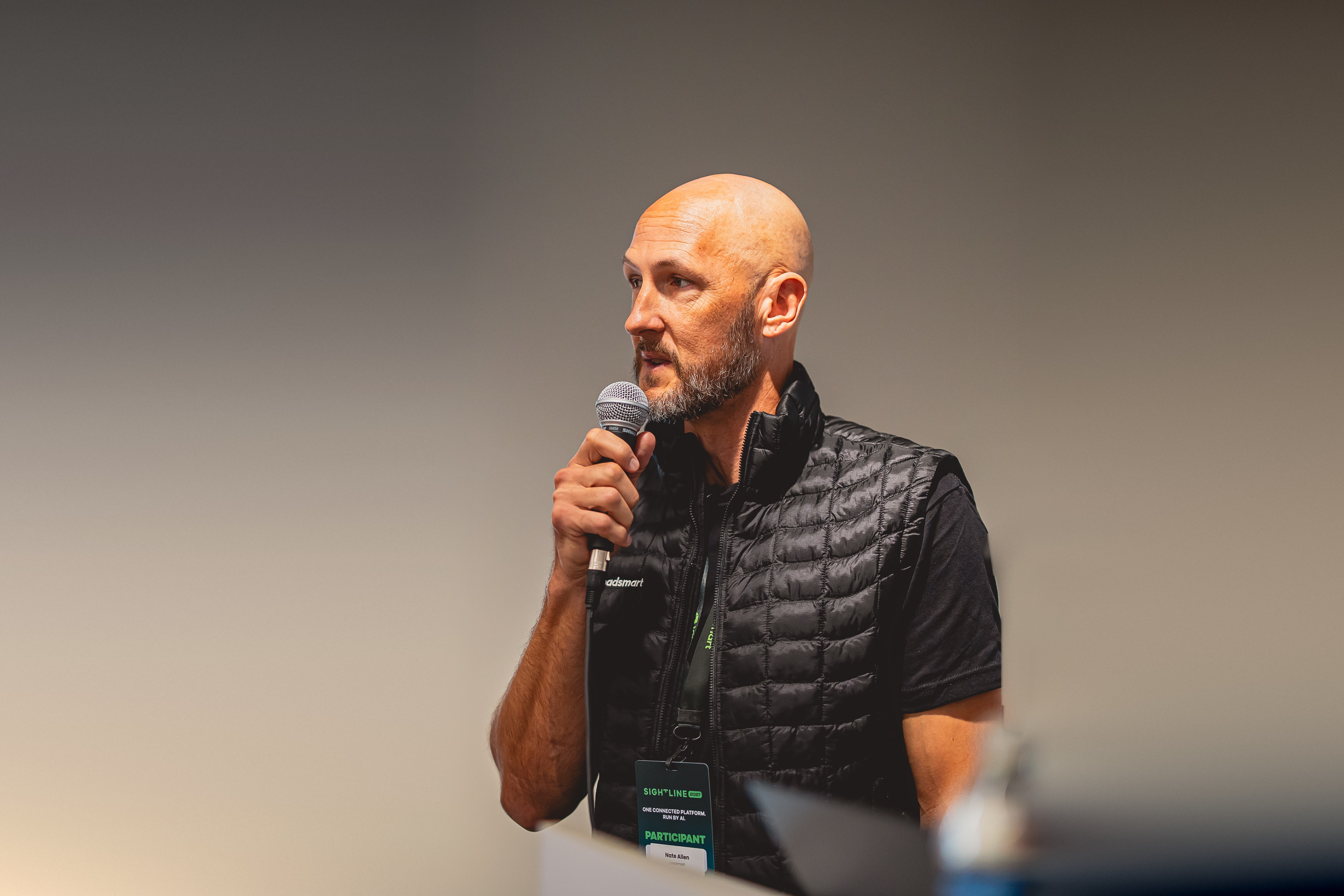
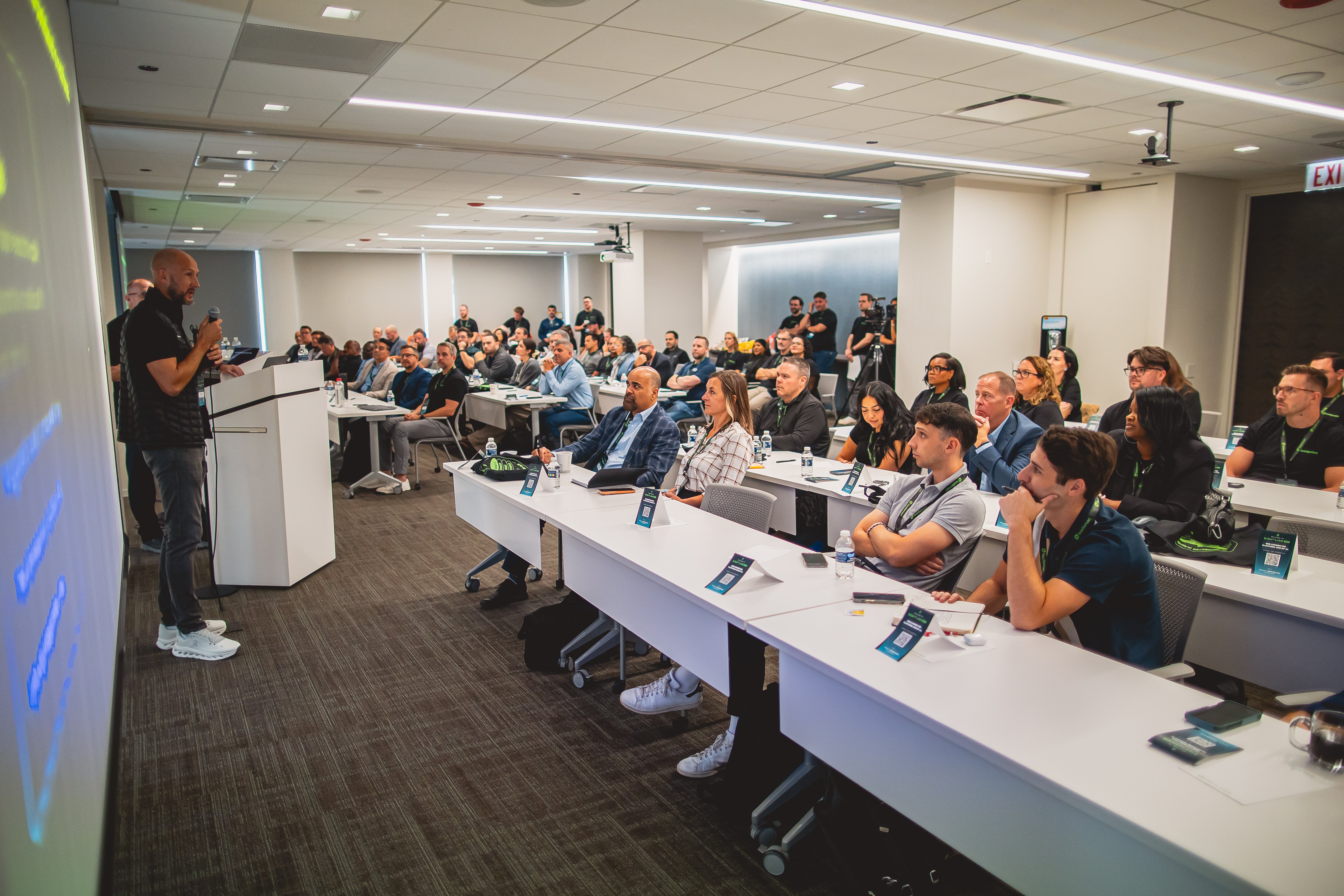
At Sightline 2027, held at our Chicago headquarters on September 16th, 2026, Aaron Thomas, Director of Engineering, Dock and Yard at Loadsmart, and Nate Allan, VP of Enterprise and Partnerships, showed where that is going. Most of the session covered Opendock's MCP servers, which let AI tools like Claude work directly with your dock data, followed by AI at the gate and the guardrails that decide what AI does on its own in the yard. The full recording is below.
How Does Opendock's MCP Server Work With Your AI Tools?
Opendock's operational MCP server lets AI tools such as Claude or Gemini find, book, and report on dock appointments the same way you would in the app, which means you can connect to Opendock with the AI tools you have today, ask it questions, and get answers. MCP stands for Model Context Protocol, which Aaron described as the standard way for AI agents to communicate with other systems, so an integrator no longer has to learn a different API (application programming interface) for every customer.
To connect, you add a new connector in Claude, enter the Opendock connector URL, and log in with your regular Opendock username and password.
In Aaron's demo, a spreadsheet screenshot became a batch of appointments. He dropped it into Claude and asked it to create them, and the AI agent checked the warehouse, load types, and required custom fields, booked what it could, and explained which appointments collided with existing ones. Booking this way still runs through a warehouse's appointment validation, such as confirming a PO number.
The bigger change is how integrations grow. When Opendock adds a new tool to its MCP server, any system connected to it can use that tool right away. Many WMS, TMS, and ERP systems are also becoming MCP-enabled, which means Opendock can sit inside an Oracle Transportation Management (OTM) or SAP workflow as one more tool.
Opendock built the first MCP workflows for carriers, brokers, and 3PLs that book at many warehouses with different rules, with warehouse-side tools to follow. For more on how it works, read How Opendock's MCP Server Connects AI Agents to Dock Scheduling.
What Can You Ask Opendock's Analytics MCP?
Opendock's analytics MCP will answer plain-language questions about your Opendock data, historical or otherwise, which means the report you need no longer has to match a screen someone built ahead of time. Aaron's examples were building a QBR (quarterly business review) report on request, finding which carriers are consistently late, and checking how much dwell time you had last month for certain load types. Dwell time is how long trucks stay at your facility. Data from Opendock's yard management system (YMS) sits in the same data lake, so the same question can cover the yard.
The team said it uses retrieval-augmented generation (RAG), which keeps your data in Loadsmart's lakehouse, separate from the AI model.
Much of that yard data starts at the gate, which is also where Opendock already uses AI today.
How Is AI at the Gate Helping With Labor and Cargo Theft?
Nate said the three topics that come up most at the conferences he attends are AI, labor, and cargo theft, and Opendock is using AI at the gate for both labor and cargo theft.
On labor, Nate said the goal is to help shippers retain people, with technology taking the yard checks nobody wants to do in 100-degree heat or a Buffalo winter.
This is not designed to get rid of people. This is saying technology can do the job that nobody wants to do, and your people who are really smart are intended to do more important things.

Nate Allen
VP of Enterprise and Partnerships, Loadsmart
On cargo theft, Nate said he can't get through a week of email without news of another stolen trailer. SmartGate uses cameras and AI to read every vehicle entering your property, including the license plate, DOT number, and company number, and timestamps each one. Driver validation checks the driver's license against the driver in real time, to catch someone impersonating another driver to carry off an expensive load.
SmartGate builds on Opendock's gate management and driver check-in, and Aaron said it works with just about any yard configuration, on inbound and outbound gates. Opendock places a small number of its own cameras at the gate, with edge computers on site, which Aaron said brings installation cost considerably lower than setups with many cameras.
What Will AI Do on Its Own in the Yard?
Nate framed the guardrails as letting AI make choices based on decisions you've already approved, then asked Aaron where people keep control and where AI takes over. Aaron answered with three categories:
- The team is starting with very low-risk automations that run on their own, so you won't have to push the button anymore.
- For higher-risk actions, such as which trailer to pick up or which dock spot to use, AI will suggest what to do and ask if you're okay with it, and you click yes.
- As of the session, the team has no plans to have AI do destructive things like delete appointments, which Aaron said are very hard to back out of.
Aaron said you'll also be able to see what AI did, when it did it, and why it did it, and the first automations the team is building show how that works in the yard. One would prepare a load ahead of pickup from one request, such as saying you have a load tomorrow. It would identify the container based on rules you set up, for example the one closest to running out of dwell time, create a yard task to move it to a dock, and block off the dock spot. Once it's loaded, it would plan the move back to storage and connect it to the appointment, so the driver knows where to go and what to pick up.
It's time for our systems to be a little bit smarter, and to be able to anticipate what it is that you really want to do, and do those actions for you, so that you don't have to spend your time doing them.

Aaron Thomas
Director of Engineering, Dock and Yard, Loadsmart
SmartGate already records when each truck arrives and leaves. Aaron said AI makes it possible to learn from that history, such as estimating how long a carrier is likely to stay next time, which he called something the team can absolutely consider.
Where Does Loadsmart AI Fit?
Opendock connects to the rest of Loadsmart AI, so planning, the origin dock, transit, the destination dock, and settlement can all run on one platform. Loadsmart AI has six AI agents available today:
- Scheduling and re-scheduling
- Tracking and status updates
- Document collection and filing
- Tender failures and re-tendering
- Proactive load audits
- Claims processing
For workflows outside these six, our team can scope building a custom AI agent for your team.
Loadsmart is offering three ways we can showcase what Loadsmart AI can do with your freight, so you can see it in action first:
- A personalized demo built on your highest-impact workflow, running on your freight
- A one-day onsite workshop, where we come to you
- A proof of concept working on your data
AI runs your freight, and our experts handle the exceptions.
Where Should Enterprise Shippers Start?
Start with one workflow at the dock, gate, or yard that your team repeats every day. Nate repeated the advice Felipe Capella, Chief Executive Officer of Loadsmart, gave in the opening keynote, which was to try one workflow and dip your toe in the water. He also said the Opendock team builds from customer feedback, so they want shippers to push and challenge them. For more on Felipe's keynote, read Sightline 2027: The Freight Operation of 2030 for Enterprise Shippers.
Every Sightline 2027 session is on the Sightline 2027 hub, where you can also request the personalized demo, onsite workshop, and proof of concept.
Frequently Asked Questions
What is an MCP server for dock scheduling?
An MCP server is a standard connection that lets AI tools like Claude read and act on your dock scheduling data. Opendock's MCP server uses your own login, so an AI agent can only do what you're already allowed to do.
How does AI help prevent cargo theft at the gate?
AI cameras at the gate read each truck's license plate, DOT number, and company number and record when it arrived. Opendock SmartGate also validates the driver in real time to catch someone impersonating another driver.
How can Enterprise Shippers start using Loadsmart AI?
Loadsmart offers a personalized demo, a one-day onsite workshop, and a proof of concept. Each one shows Loadsmart AI working on your own freight first.