
Share this
Key Takeaways
- Two Enterprise Shippers took different paths from manual freight work to connected systems.
- Scotts Miracle-Gro proved the results at three plants before going network-wide.
- Brendan Donovan with Babylist says vendors now book in 2 minutes instead of 15.
- See Loadsmart AI in action on your own freight first.
Most freight teams know what happens when their systems don't talk to each other. For Babylist, it meant five dates for one purchase order across its ERP and TMS, and a buying team that kept asking when each PO would actually arrive.
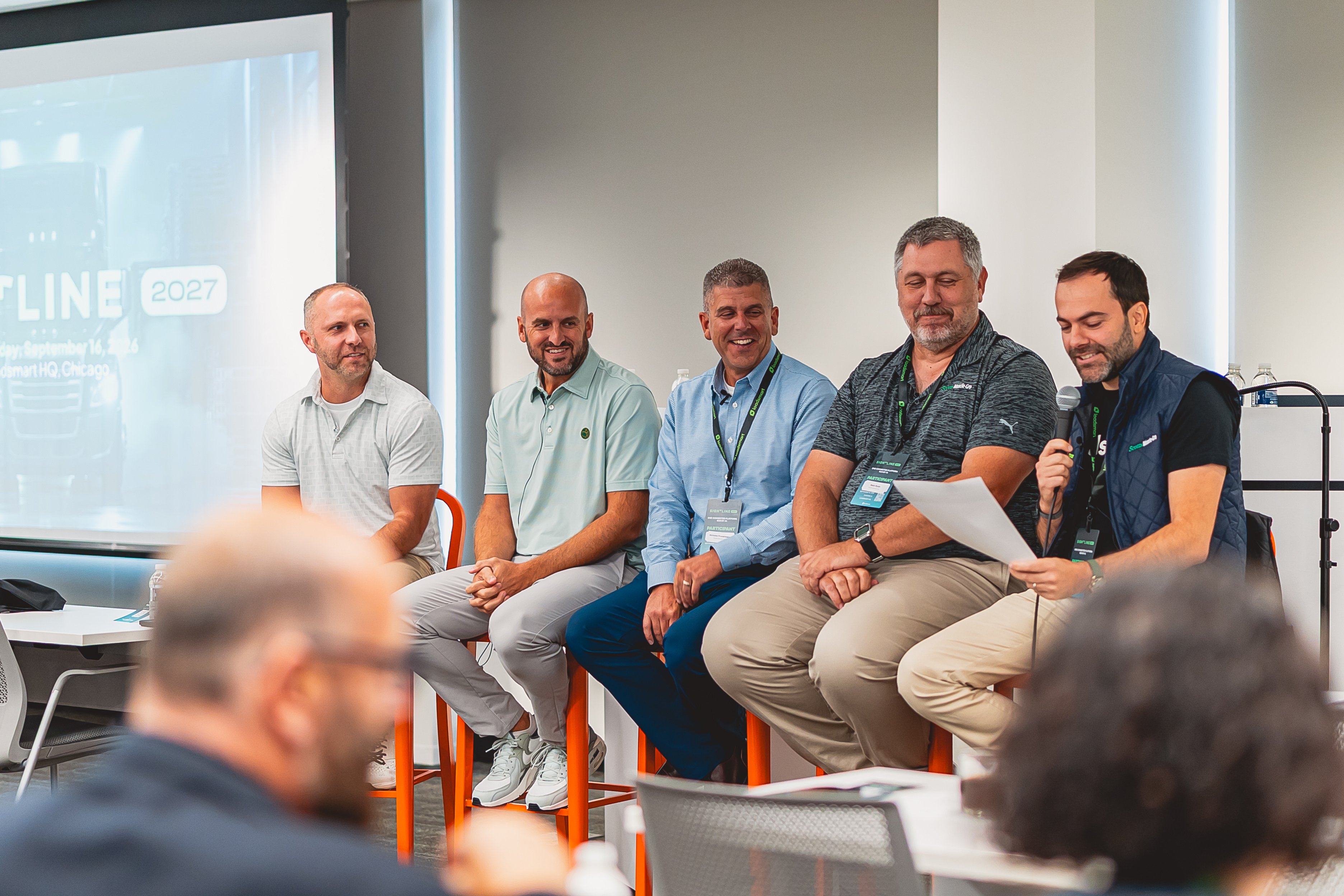
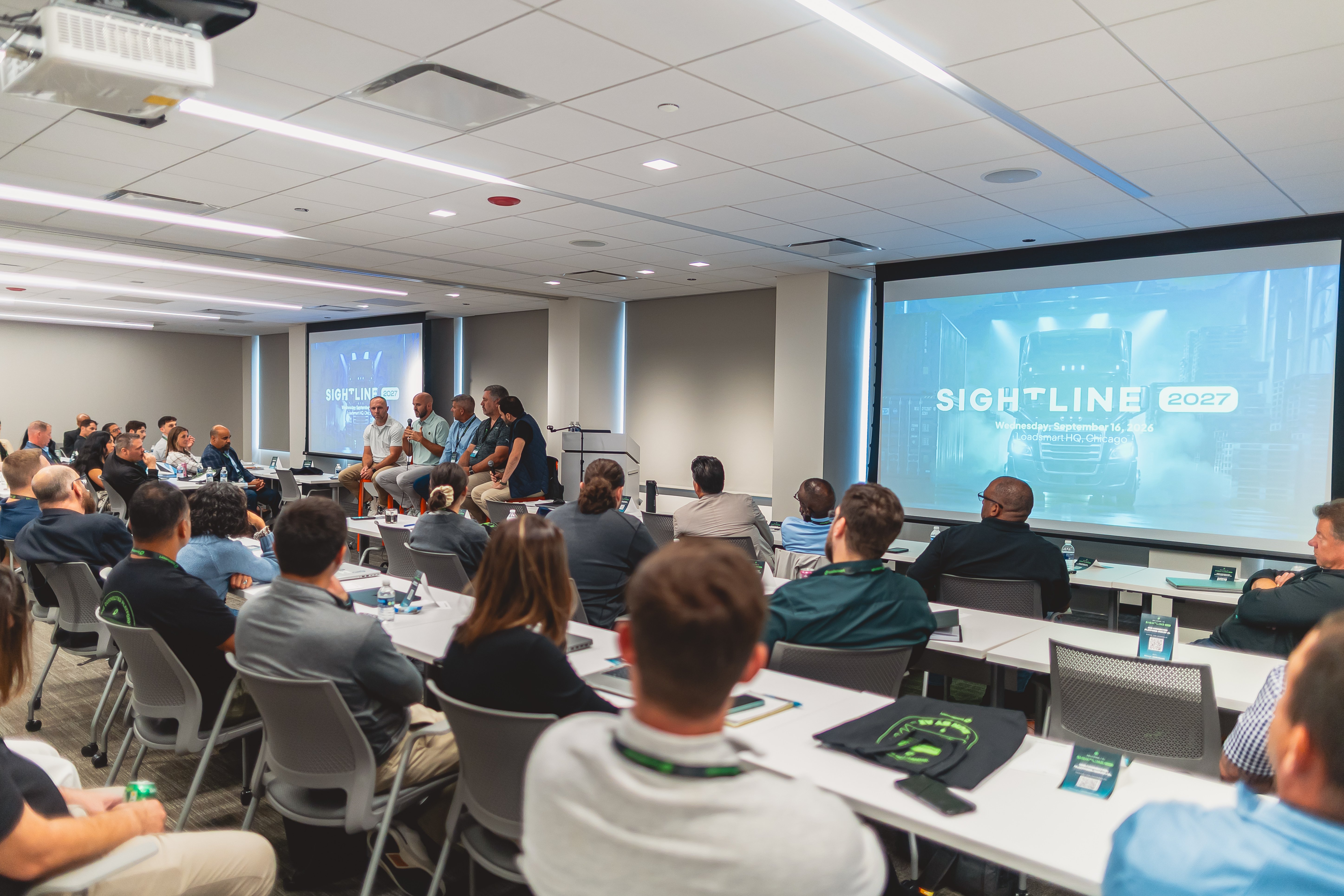
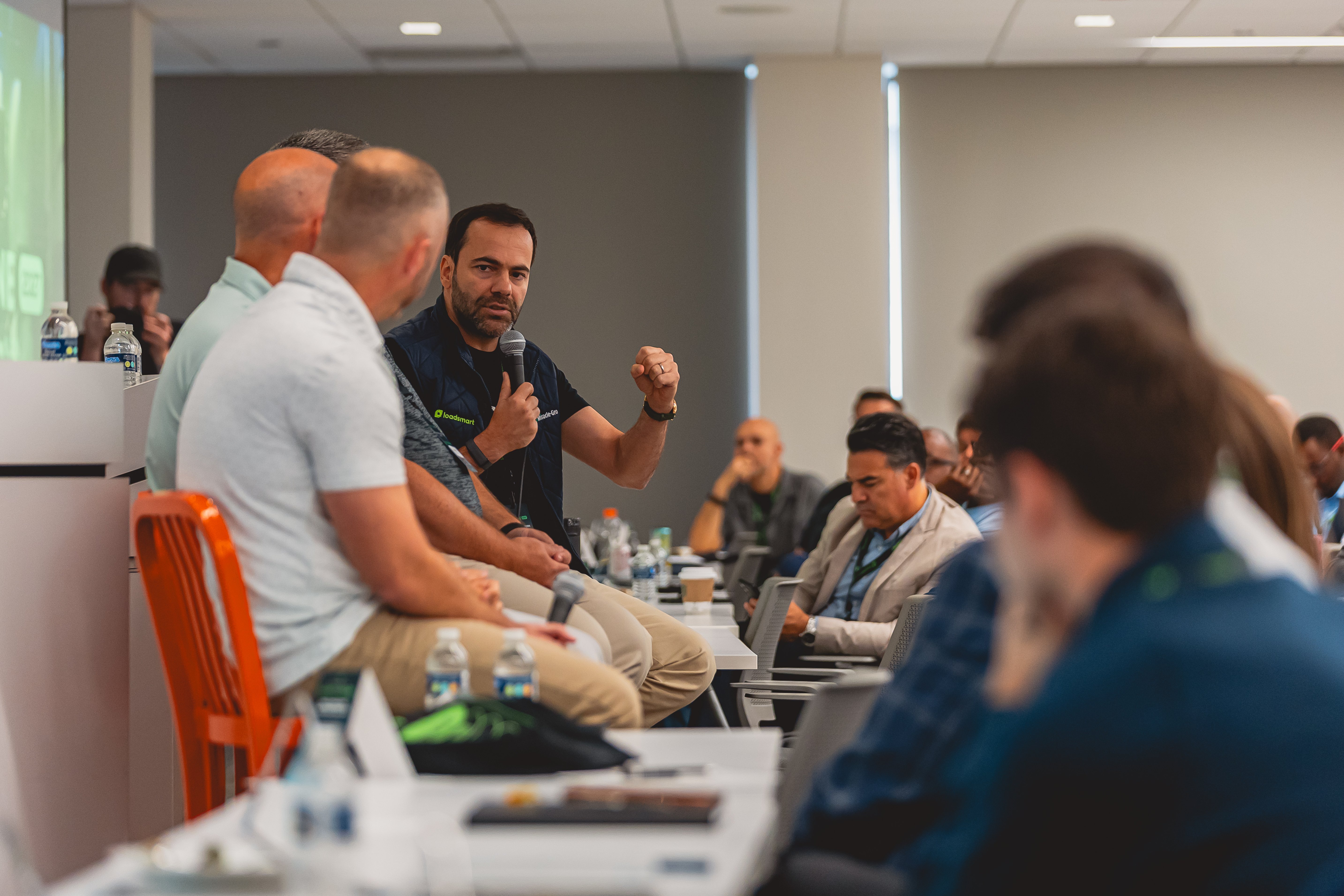
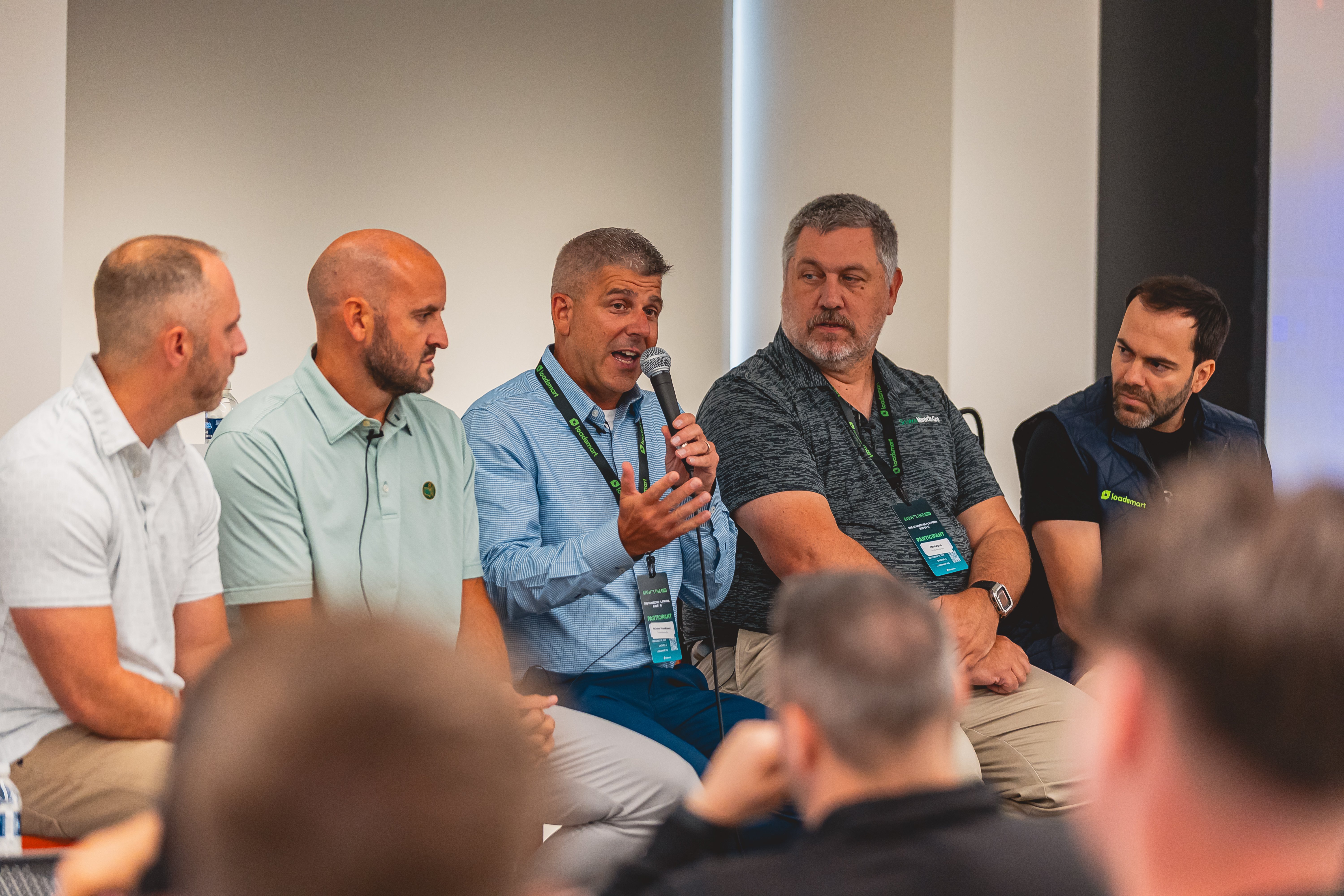
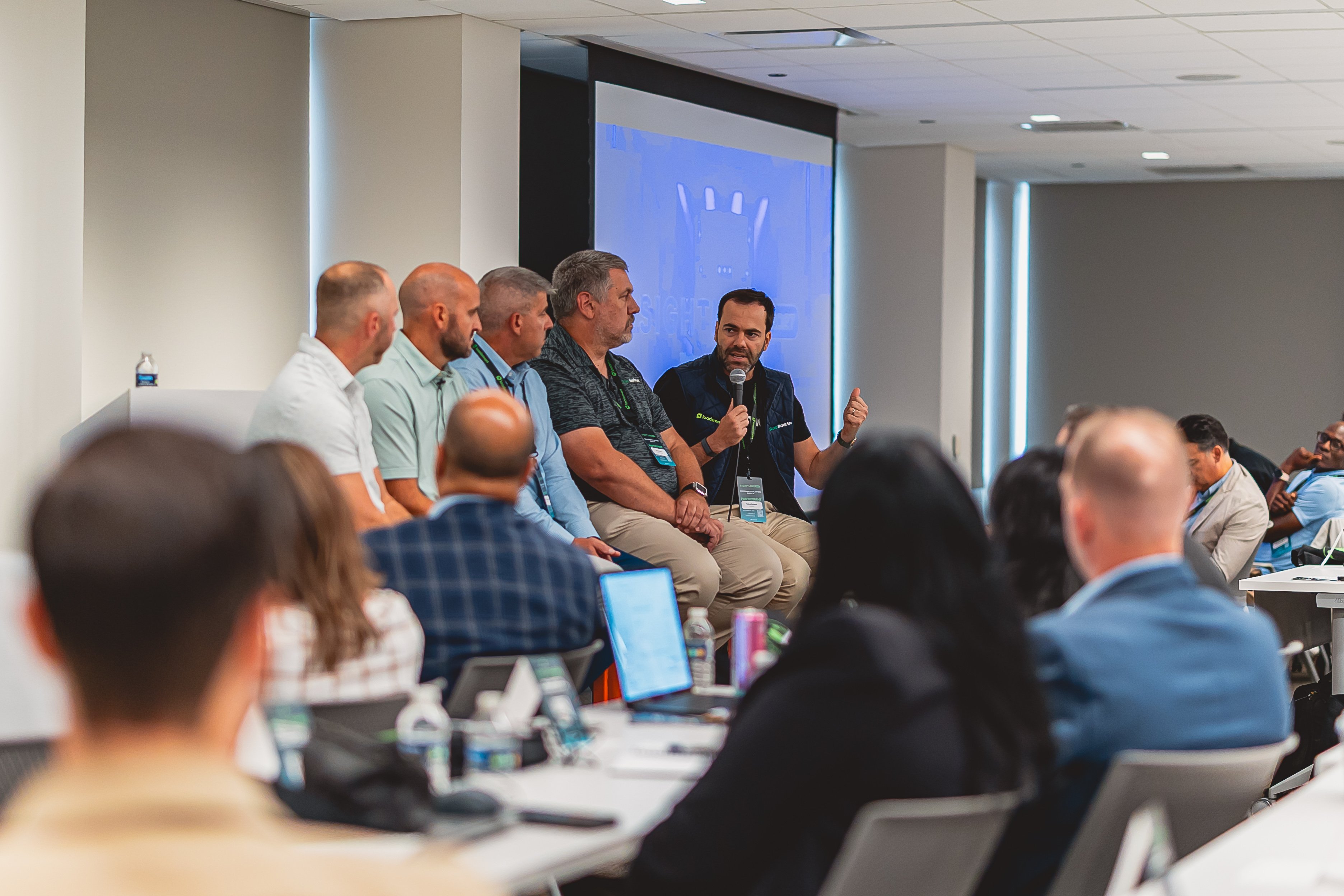
At Sightline 2027, held at our Chicago headquarters on September 16th, 2026, Babylist and Scotts Miracle-Gro shared how they fixed problems like that on our customer panel.
On the panel
- Felipe Capella, CEO and co-founder, Loadsmart (moderator)
- Joe Deveney, Director of Transportation Logistics, Babylist
- Brendan Donovan, Transportation Manager, Babylist
- Sean Ryan, Distribution Operations Manager, Scotts Miracle-Gro
- Nick Prusakiewicz, Director of Contract Manufacturing and Distribution, Scotts Miracle-Gro
Neither team changed its logistics operations overnight. Scotts started with three plants, and Babylist is still onboarding vendors. The panel covered how they got their teams on board, what slowed each of them down, and where tools like ShipperGuide TMS and Opendock fit in. The full recording is below.
What Is Sightline 2027?
Sightline 2027 is Loadsmart's annual event for enterprise shippers. The first edition brought enterprise shippers from 28 companies to our Chicago headquarters, and each edition looks one year ahead. For the full day, read our Sightline 2027 recap.
How Did Their Logistics Operations Work Before the Switch?
For both companies, logistics operations ran on manual work holding their systems together. Babylist was growing 50% year over year, and vendors emailed 50 to 60 shipments a day on a four-tab spreadsheet that the team reformatted and uploaded into NetSuite by hand. Brendan said that process wasn't scalable anymore. At Scotts, plants across the country each did things a little differently, and Nick said their manual systems weren't going to maintain the service levels customers expect.
How Did Scotts Miracle-Gro Roll Out Across 36 Plants?
Scotts started with three plants, proved the results there, and expanded until ShipperGuide and Opendock were in every location. Sean said a lot of the rollout came down to change management, since some people had been doing things the same way for 20 years. The plants already using the system became the proof. Nick said they sent early adopters to the sites that were struggling, and that collaboration across the 36-plant network got them where they are today.
How Did Babylist Connect Its Systems?
Babylist connected its ERP and TMS through a ShipperGuide vendor portal, which ended a daily routine that ran through one person and an inbox. Vendors used to email their shipments on spreadsheets, and one teammate on the West Coast pulled them together and uploaded them, so the East Coast team couldn't start load planning until 2 or 3 o'clock. Now the portal pulls PO details straight from NetSuite, vendors book their own shipments in about two minutes instead of 15, and each PO lands in load planning as soon as it's ready.
With a transportation team of four, Joe said that time goes back into on-time performance, vendor compliance and cost.
Does Every Freight Automation Need AI?
Not every freight automation needs AI. When a carrier already sends status updates through EDI (electronic data interchange), a TMS can pull them in automatically. Babylist shared one example. Its team used to check jbhunt.com for carrier status by hand, and now J.B. Hunt sends updates over EDI through ShipperGuide TMS. Scotts Miracle-Gro made a similar change with electronic bills of lading (eBOLs). Drivers now capture signatures and documents with their phone camera, which replaced a full day of scanning paper BOLs into SAP.
What Would They Do Differently?
If Scotts Miracle-Gro started over, it would bring carriers and its own operations team into the change earlier. Sean Ryan, Distribution Operations Manager, said the team spent the rollout focused on its plants and on the ShipperGuide platform without knowing exactly what carriers were seeing, and it has spent the last couple of years catching up. His advice is to talk with carriers early about what the change means for them and what you'll expect from them, and to have IT ready to support the move.
Nick Prusakiewicz, Director of Contract Manufacturing and Distribution, would bring operations team members in early to give input. He recommends a core team to drive the change, time set aside to hear out potential problems, and routine office hours.
Both companies still have work ahead. Scotts is bringing customer pickups into the system over the next year, and Babylist is building a second phase of its vendor portal to cover the rest of its inbound logistics, including international, parcel and vendor-managed freight.

Where Does Loadsmart AI Fit?
Loadsmart AI picks up the repetitive freight work that's left after your systems are connected. That's the work that still lands on a person every day, like chasing a carrier for a status update, rebooking a missed dock appointment or filing a POD.
Loadsmart AI has six AI agents available today:
- Tender failures and re-tendering
- Tracking and carrier status updates
- Document collection and filing
- Scheduling and re-scheduling
- Claims processing
- Proactive load audits
For workflows outside these six, our team can scope building a custom AI agent for your team.
Loadsmart is offering three ways to see Loadsmart AI in action on your freight first:
- A personalized demo built on your highest-impact workflow, running on your freight
- A one-day onsite workshop, where we come to you
- A proof of concept working on your data
AI runs your freight, and our experts handle the exceptions.
Where Should Enterprise Shippers Start?
Start small and prove it, the way both companies did. Scotts tested at three plants before expanding to every location, and Babylist started with Opendock at its new facility before adding ShipperGuide TMS and the vendor portal. Bring your carriers and operations team in early, and pick one manual process to replace first.
Sightline 2027 brought enterprise shippers together to look at where freight and AI go next, and we're already planning Sightline 2028 to keep the conversation going. Every Sightline 2027 session is on the Sightline 2027 hub, where you can also request the personalized demo, onsite workshop and proof of concept.
Frequently Asked Questions
How do Enterprise Shippers modernize their logistics operations?
Start by naming the manual work the change should replace, like spreadsheets, email and re-entered data. At Sightline 2027, Babylist and Scotts Miracle-Gro described moving their logistics operations onto ShipperGuide TMS and Opendock, with Babylist connecting its ERP through a vendor portal and Scotts rolling out plant by plant.
How do you roll out a new TMS across multiple sites?
Start with a few sites, prove the results, and expand. Scotts Miracle-Gro began with three plants and sent early adopters to help struggling sites. Nick Prusakiewicz, Director of Contract Manufacturing and Distribution at Scotts, recommends a core team and routine office hours.
How can Enterprise Shippers start using Loadsmart AI?
Start with one workflow and test Loadsmart AI on a limited set of loads. Loadsmart offers a personalized demo, a one-day onsite workshop and a proof of concept on your own data.